Manfred Sailer
Institut für England- und Amerikastudien (Section English Linguistics)
Goethe-Universität Frankfurt am Main
Grüneburgplatz 1
D-60629 Frankfurt am Main
Germany
Homepage: http://user.uni-frankfurt.de/~sailer/
Tel.: +49 - (0)69 - 798 32526
Fax: +49 - (0)69 - 798 32509
E-Mail: sailer "at" em "dot" uni-frankfurt "dot" de
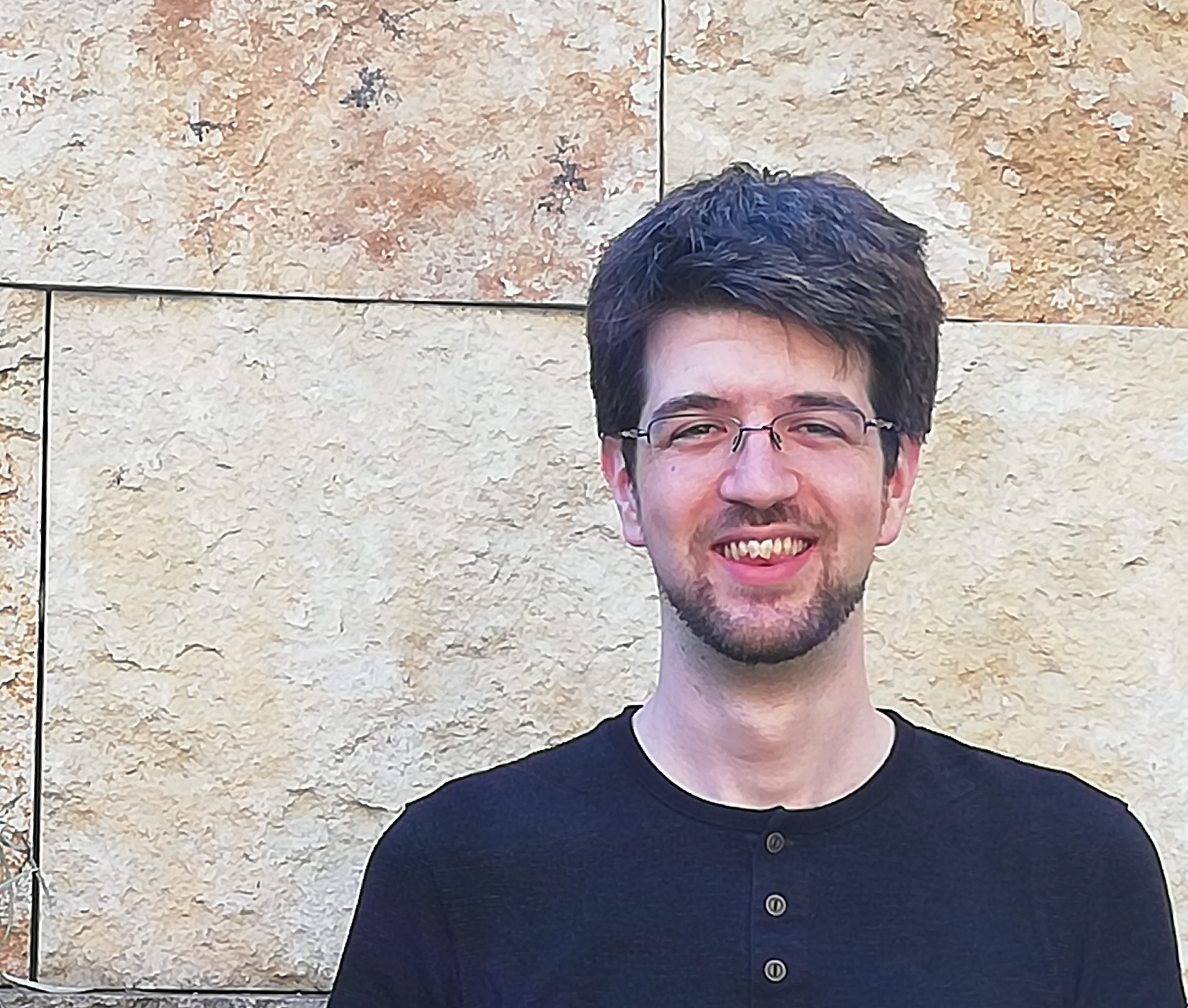
Findlay in Frankfurt, June 2018 (photo: M. Sailer, BY-NC-ND 3.0)
Jamie Findlay (Oxford) spent a research visit at the IEAS from June 18 to July 5. During his visit, Jamie was working with Sascha Bargmann and Manfred Sailer on recent developments in formal approaches to the analysis of idiomatic expressions. He also discussed this topic in his talk “How (not) to analyse multiword expressions” (June 25, 4.15-5.45 pm, IG 3.201).
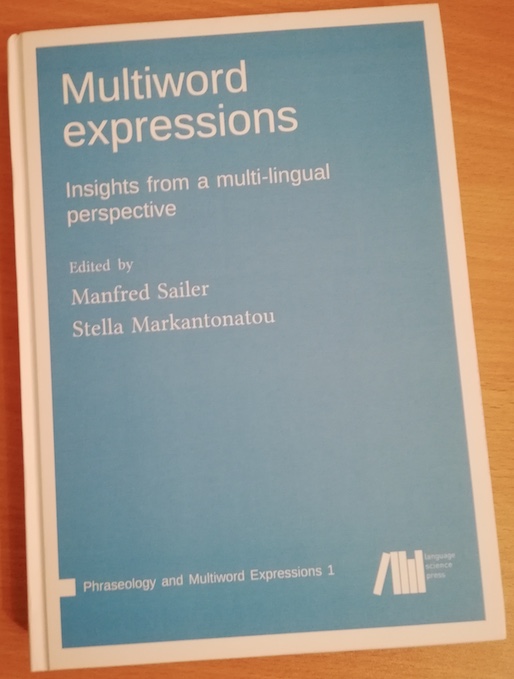
Earlier this week, Language Science Press has published the following edited volume:
(PMWE1, foto: M. Sailer, May 2018)
Sailer, Manfred & Stella Markanotantou. 2018. Multiword expressions: Insights from a multi-lingual perspective (Phraseology and Multiword Expressions, Vol 1). Berlin: Language Science Press. doi 10.5281/zenodo.1182583
This year’s annual meeting of the German Lingusitic Society (DGfS) hosted a workshop on One-to-many relations in morphology, syntax, and semantics, organized by Berthold Crysmann (Paris). The workshop comprised a number of presentations by members of the IEAS-LLF network One-to-Many (2017 & 2018). Continue reading One-to-Many Workshop at DGfS 2018→
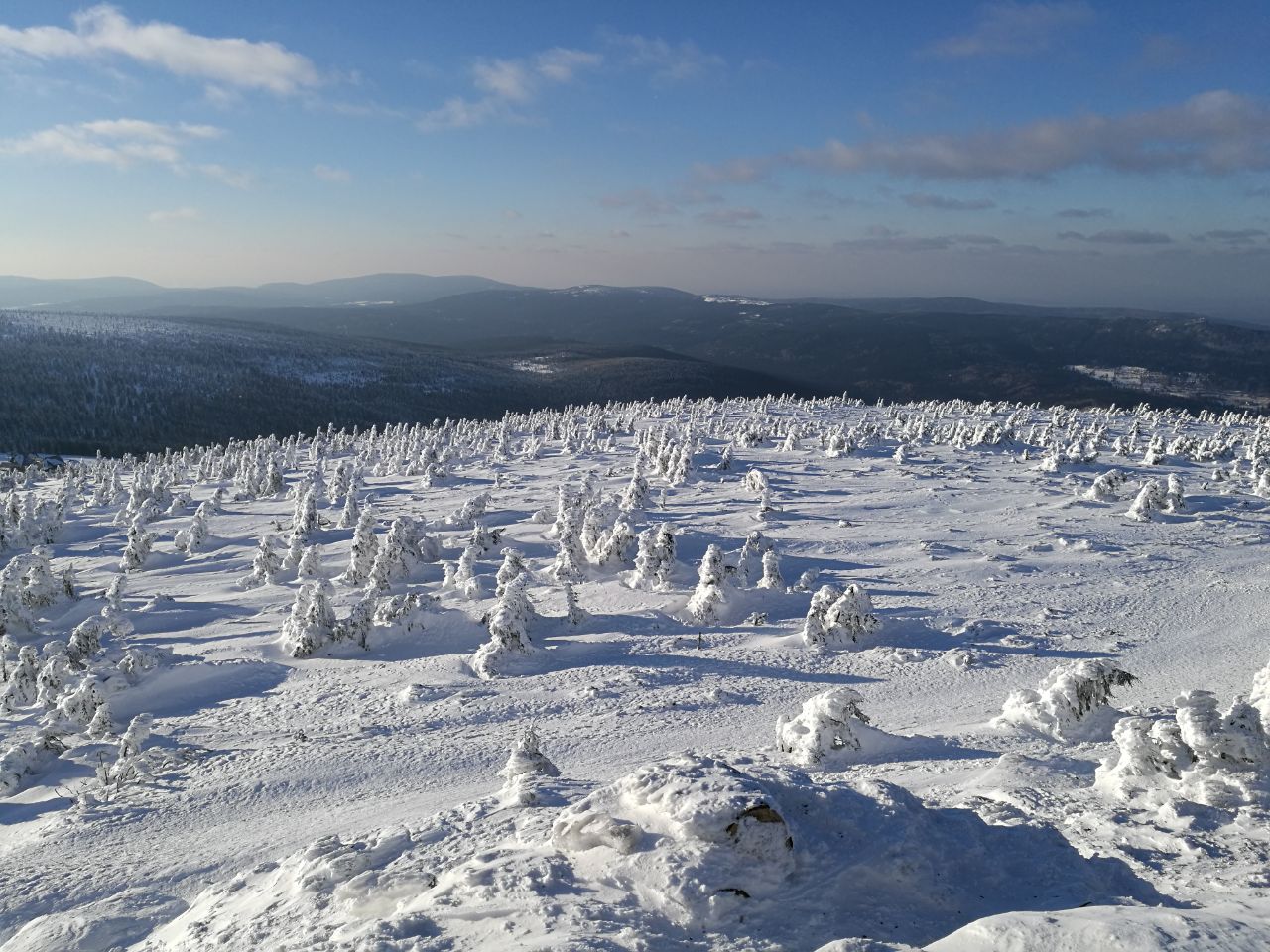
Sascha Bargmann, Berit Gehrke (LLF, Paris) & Frank Richter had a joint presentation during the 19th Szklarska Poreba Workshop (February, 23-26). Sascha and Berit attended the meeting and gave a talk on “How to modify idioms”.
Szklarska Poreba, February 2019 (Photo: S. Bargmann, BY-NC-ND 3.0)
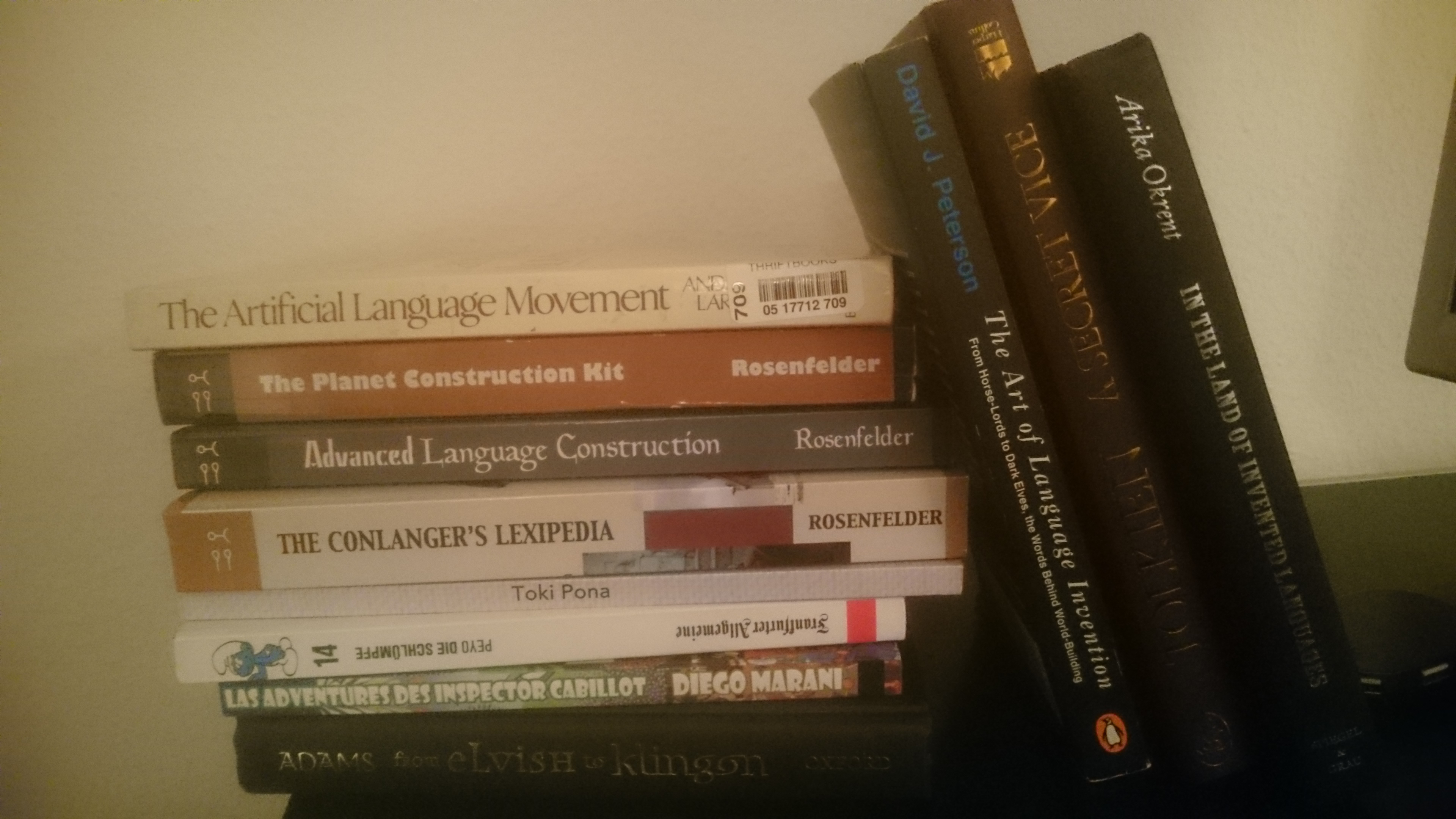
Some conlang books (Photo: M. Sailer, BY-NC-ND 3.0)
One day before the start of the annual conference of the German Linguistic Society (DGfS), the society’s Lehramtsinitiative organized its traditional information day for teachers. This year’s topic was Welche Grammatik braucht die Schule? (What kind of grammar is needed for school?). The event included a 2-hour working group on conlanging under the title Kreative Grammatikreflexion: Sprachen erfinden im Grammatikunterricht. This working group was organized by Alexandra Zepter (Cologne), Judith Bündgens-Kosten (Frankfurt) and Manfred Sailer (Frankfurt).
Manfred Sailer’s paper on Doing the devil. Deriving the PPI-hood of a negation-expressing multi-dimensional idiom has appeared in the recent number of Linguistics. The paper is an elaboration of a presentation at the workshop on Positive Polarity Items organized by Mingya Liu and Gianina Iordăchioaia at DGfS 2015 and has now been integrated into a special issue on Positive Polarity Items, edited by Mingya and Gianina. Continue reading Sailer on “Doing the Devil”→
In the week of November 13-17, Pegah Faghiri (Cologne & Paris) visited our group as part of the activities of the Pars-Frankfurt network One-to-many Correspondences.